
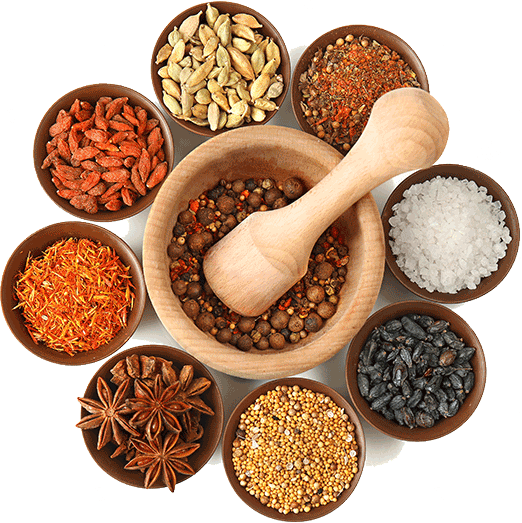
Spices have been an integral part of Indian cuisine and culture for centuries. Their use can be traced back to the Vedic times, over 3,500 years ago. The ancient Indian texts, the Vedas, mention the use of spices in cooking, medicine, and religious rituals.
One of the earliest references to spices in Indian literature is found in the Atharva Veda, which mentions the use of pepper, ginger, and turmeric for medicinal purposes. The use of spices in cooking is also mentioned in the Yajur Veda, where various spices and herbs are used to flavor food and improve digestion.
During the Vedic period, spices were not only used for their flavor but also for their medicinal properties. Many of the spices used in ancient India, such as turmeric, ginger, and cumin, are known to have anti-inflammatory and antioxidant properties. In Ayurveda, the traditional Indian system of medicine, spices are used to balance the doshas or energies in the body and to treat various ailments.
As trade and commerce developed in ancient India, the demand for spices increased, and they became a valuable commodity. The spice trade was one of the main drivers of the Indian economy, and spices were exported to countries such as Greece, Rome, and Egypt.
In addition to their use in cooking and medicine, spices also played a significant role in religious rituals and ceremonies. Many spices, such as sandalwood, camphor, and saffron, are used in Hindu rituals and are considered to be sacred.
In conclusion, the use of spices in Indian cuisine and culture can be traced back to the Vedic times. Spices not only added flavor to food but also had many medicinal properties, and their use has been an integral part of Indian tradition for centuries. Even today, the use of spices continues to be an important aspect of Indian cuisine and culture.